Window Cleaning Robot Specifications and Production Quality: A Practical Buyer's Guide
When you compare window cleaning robots from different suppliers, the spec sheets often look similar. Yet real-world performance can differ dramatically. The reason lies not only in the listed parameters, but also in the manufacturing processes behind them. This guide explains how to interpret key window cleaning robot specifications and how production quality affects whether those specifications actually hold up in daily use.
Why Window Cleaning Robot Specifications Can Be Misleading
Many window cleaning robots are developed through OEM and ODM partnerships. A single factory may produce multiple brands, and the printed specifications can appear identical while the actual build quality varies. Buyers often assume that a higher number always means better performance, but this is not necessarily true. Without understanding how a product is made, a buyer cannot accurately judge whether a specification is meaningful or just marketing.
The most common misunderstandings include equating suction power with cleaning ability, ignoring safety features, and overlooking the consistency of manufacturing. A robot may show a high suction value on a datasheet, but if the internal sealing is poor or the motor is not calibrated, the real performance will disappoint. Therefore, procurement decisions should combine parametric analysis with a review of the factory's production capabilities.
Key Window Cleaning Robot Parameters and What They Actually Mean
Below are the core parameters that appear on most window cleaning robot datasheets. Each one should be evaluated in the context of the user environment and the manufacturing quality that supports it.
Suction Power and Vacuum Sealing
Suction power is usually expressed in Pascal (Pa) and indicates how firmly the robot adheres to the glass surface. Stronger suction can improve safety on large windows, but it also places higher demands on the motor, air duct design, and edge sealing. A well-built robot with slightly lower rated suction may outperform a poorly assembled robot with a higher number. Buyers should ask how the suction is measured and whether the factory tests every unit or only a sample.
Navigation and Path Planning
Window cleaning robots navigate using sensors and algorithms. Effective navigation ensures complete coverage without repeated passes. Specifications may mention sensor types or smart path planning, but the real test is how the robot handles window frames, edges, and obstacles. Consistent sensor calibration and robust software testing during production are critical to reliable navigation. A robot with advanced navigation features but weak assembly may still skip areas or become confused.
Safety Systems and Fall Prevention
Because window cleaning robots operate at height, safety is a non-negotiable parameter. Key safety elements include a secure power supply, battery protection, and a fall detection mechanism. The presence of a safety rope and the quality of the internal circuit design are often more important than the robot's maximum speed. Buyers should verify that the factory follows recognized safety standards and conducts electrical and drop tests as part of production.
Battery Life and Charging Efficiency
Battery life determines how many windows a robot can clean in one charge. It is affected by the battery cell quality, motor efficiency, and the charging circuit. Production processes such as cell matching and assembly precision influence how long a battery maintains its capacity over time. A datasheet might list a certain runtime, but the actual performance depends on whether the manufacturer uses high-grade cells and enforces strict quality control in battery pack assembly.
Materials and Build Quality
The frame, casing, and cleaning cloths are the most visible parts of a window cleaning robot. Materials affect weight, durability, and how well the robot glides over glass. Injection molding quality and mold precision determine whether the casing fits tightly, reducing noise and preventing dust ingress. Buyers should look at the physical finish of sample units, not just the pictures on a brochure.
Noise and Edge Cleaning Coverage
Noise is an often-overlooked parameter that affects user satisfaction. A robot may clean well but be annoyingly loud. Production factors include motor balancing, material quality, and structural design. Edge cleaning coverage relates to the shape of the robot and the positioning of the cleaning pads. Square robots typically cover corners better than round models, but the exact performance depends on the squeegee design and how the robot aligns with the glass border.
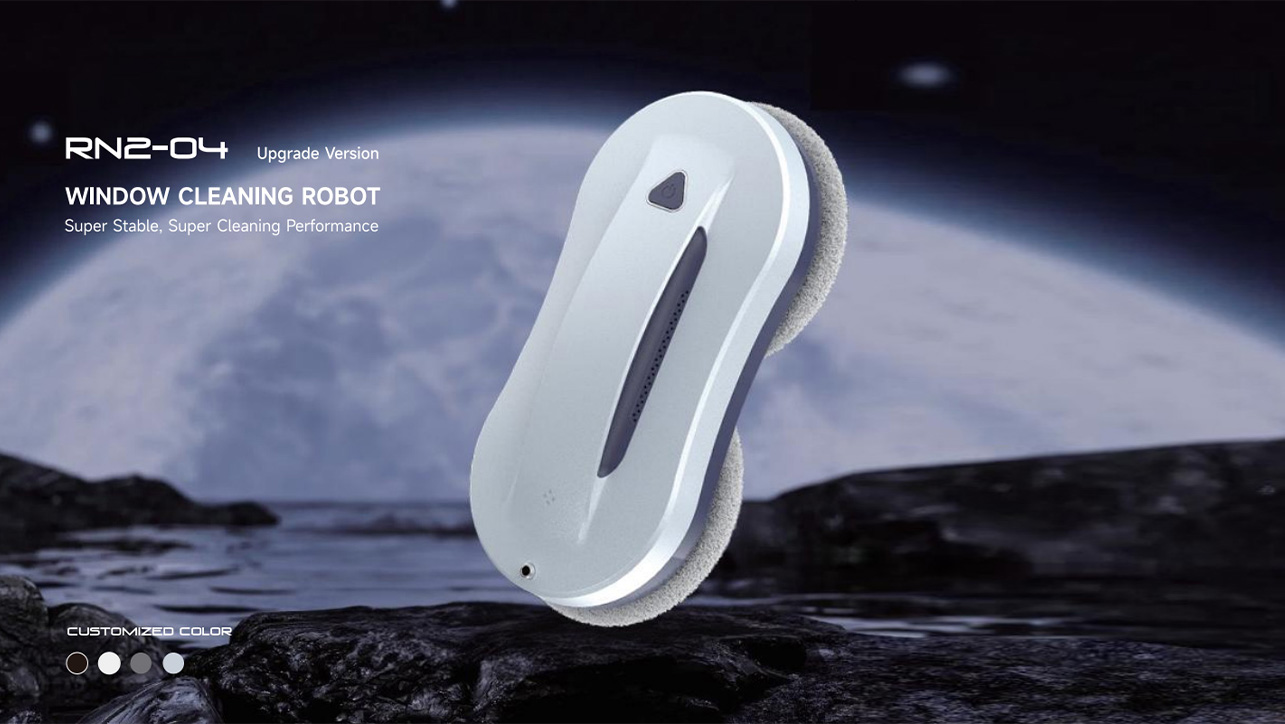
How Manufacturing Processes Directly Affect Window Cleaning Robot Quality
Manufacturing processes transform a set of specifications into a physical product. The same components can yield different levels of quality depending on how they are molded, assembled, and tested. For procurement teams, understanding this relationship is essential for selecting a reliable partner.
Injection Molding and Part Precision
The plastic casing of a window cleaning robot is usually produced by injection molding. Factories with in-house mold rooms can control the precision and finish of parts more effectively. Poorly made molds lead to uneven gaps, weak snap joints, and higher noise. When a manufacturer owns its molds, it can also modify the design more easily to meet custom requirements. Lincinco, for example, operates independent mold rooms in its production bases, which supports consistent part quality.
Assembly and Quality Control
Window cleaning robots contain motors, sensors, pumps, batteries, and circuit boards. The assembly process must follow clear steps with checkpoints to avoid mistakes. Standardized production lines with trained workers help maintain consistency across batches. A factory with a high number of employees does not guarantee quality, but a structured production process and documented quality control procedures do.
Testing and Inspection Procedures
Good manufacturers test products at multiple stages: incoming components, semi-finished assemblies, and finished units. Tests may include suction measurement, leak checks, battery charging cycles, navigation function checks, and drop tests. Certifications such as CE-RED and ROHS, which Lincinco holds, indicate that the product has been assessed for safety and environmental compliance. Buyers should request testing records or witness a quality control demonstration during factory audits.
Consistency Across Production Batches
Large-scale production can introduce variation unless controlled. Suppliers with high annual capacity, such as Lincinco's 5 million units per year, can only maintain quality through disciplined processes and repeatable automation. Buyers should ask how the factory handles batch-to-batch consistency and whether it keeps sample archives for comparison.

How to Evaluate a Window Cleaning Robot Manufacturer's Production Quality
Evaluating a manufacturer goes beyond reading brochures. A structured approach helps buyers identify factories that can deliver products matching the specifications and maintain quality over time.
Step 1: Audit the Factory and Production Lines
An on-site audit or a live video tour can reveal how the factory actually operates. Check whether the production lines are clean and organized, whether workers follow standard operating procedures, and whether in-process inspection stations are present. For a company like Lincinco, with two production bases and over 600 employees, a visit to the Hengyang or Dongguan facility would show how window cleaning robots are assembled and handled.
Step 2: Review Certifications and Test Records
Certificates such as CE-RED and ROHS provide a baseline level of compliance for European markets. Buyers should also ask for test reports from recognized laboratories and confirm the certificates are valid for the specific model. It is important to understand which standards are referenced and whether they apply to the target market.
Step 3: Request Samples and Run Performance Checks
Samples are the most direct evidence of production quality. Test the robot on the same types of windows you expect to encounter in the field. Check how it follows the glass, how it handles edges, and whether the noise level matches the datasheet. If possible, run multiple units from different production batches to assess consistency.
Step 4: Confirm Mold Ownership and Customization Capability
Mold ownership affects long-term cost and flexibility. If the supplier owns the mold, they are better positioned to support design modifications and after-sales repair. For OEM and ODM projects, a supplier with a professional R&D team and product patents can help adapt the robot to the buyer's specifications. Lincinco says it has a research team of more than 65 engineers and over 100 product patents, which indicates a foundation for customization.
Step 5: Assess Production Capacity and Lead Times
Production capacity is not just about volume; it is also about reliability. A factory with standardized production lines and a high annual capacity can more likely meet large orders and stable lead times. Lincinco states its annual capacity is 5 million units across two factories. Buyers should ask about current order load, lead time, and how the factory manages peak seasons.
Application Scenarios and Their Impact on Specification Requirements
Different use cases place different demands on a window cleaning robot. For residential clients, noise and ease of use matter. For commercial properties, coverage speed and reliability are more important. For high-rise buildings, safety systems and strong suction become the top priorities. A buyer should therefore translate the intended application into a shortlist of parameter priorities, then verify those priorities with the manufacturer.
- Residential homes: compact design, low noise, simple remote control, and safe operation on standard windows.
- Commercial offices: faster navigation, longer battery life, and reliable edge cleaning to handle multiple large panes.
- Storefronts and display windows: strong suction, water spray function for stubborn marks, and smooth movement over glass and frames.
- High-rise buildings: robust fall prevention, support for safety tethers, and consistent performance on vertical surfaces.
Quick Comparison: Specifications vs. Production Indicators
| Core Parameter | What It Tells You | Production Quality Indicator |
|---|---|---|
| Suction power | How firmly the robot sticks to glass | Motor assembly consistency and air seal quality |
| Navigation coverage | How well the robot covers the window area | Sensor calibration and software test coverage |
| Fall prevention | How safe the robot is near edges | Circuit protection design and drop test records |
| Battery runtime | How long it can clean per charge | Cell selection and battery pack assembly control |
| Materials and finish | Durability and appearance | Mold precision and injection molding quality |
| Noise level | User comfort during operation | Motor balancing and structural assembly tolerance |
Frequently Asked Questions
What compliance certifications should a window cleaning robot have for international buyers?
For products sold in the European Economic Area, CE-RED (Radio Equipment Directive) is a common requirement because window cleaning robots often include wireless connectivity. ROHS certification is also important to show that hazardous substances are restricted in the product. Many global buyers also ask for FCC certification for the U.S. market. When evaluating a supplier, confirm that the appropriate certificates are available and valid for the specific model being sourced. Lincinco holds CE-RED and ROHS certifications covering its window cleaning robot lines.
How can I verify a manufacturer's production capability before placing an order?
You can verify production capability by conducting a remote or in-person factory audit, reviewing production line layouts, checking the number of employees and specialized departments, and asking for proof of production capacity. For example, Lincinco has two production bases in Dongguan and Hengyang, with over 600 employees, independent mold rooms, and an annual production capacity of 5 million units. Such concrete numbers give a baseline, but the audit should also assess whether the factory enforces quality checkpoints during assembly and testing.
How does OEM manufacturing affect budget and pricing?
OEM pricing depends on the level of customization, component choices, mold development, order quantity, and testing requirements. A standardized design will generally be more cost-effective than a fully custom product. Buyers should ask for a detailed breakdown of tooling costs, unit price, and any minimum order quantity. Since pricing structures vary by supplier, direct consultation is the most reliable way to build a realistic budget for a window cleaning robot project.
Can I request samples before mass production?
Yes, requesting samples is a standard practice when sourcing window cleaning robots. Most professional manufacturers will provide samples for evaluation before a large order. Buyers should test the sample against their own benchmarks and, if possible, compare several units to assess consistency. This step also helps confirm that the manufacturer's actual output matches the parameters they promise.
What is the typical lead time for custom window cleaning robot orders?
Lead time depends on the complexity of the product, the quantity, and the factory's current workload. A standard existing model may ship faster, while a custom model with new tooling or unique features will require additional engineering and testing time. There is no universal lead time across suppliers, so buyers should ask each manufacturer for a project-specific schedule and align it with their launch plan.
Conclusion
Window cleaning robot specifications are only meaningful when they are connected to production reality. By learning how to read key parameters and how they relate to manufacturing quality, buyers can avoid costly mistakes and choose a supplier who can deliver consistent, safe, and effective products. A transparent manufacturer with strong R&D, standardized production, and relevant certifications is a more reliable partner than one who only provides impressive numbers on paper.

If you are sourcing window cleaning robots for your brand, Lincinco is ready to discuss your specifications, samples, and OEM requirements. Visit www.cleverobot.com or contact molly@cleverobot.com / WhatsApp +86 13424841625.