Window Cleaning Robot Arrived Underperforming? Fix It With Purchasing Terms and Acceptance Criteria
A window cleaning robot can arrive underperforming and still be exactly as ordered — because nothing was ever written down. This scenario-driven explainer is for first-time buyers who have unboxed a unit, found it short of what they expected, and discovered there is no written basis to claim a remedy. The fix is not a stronger complaint after delivery. It is a testable order specification, agreed before payment.
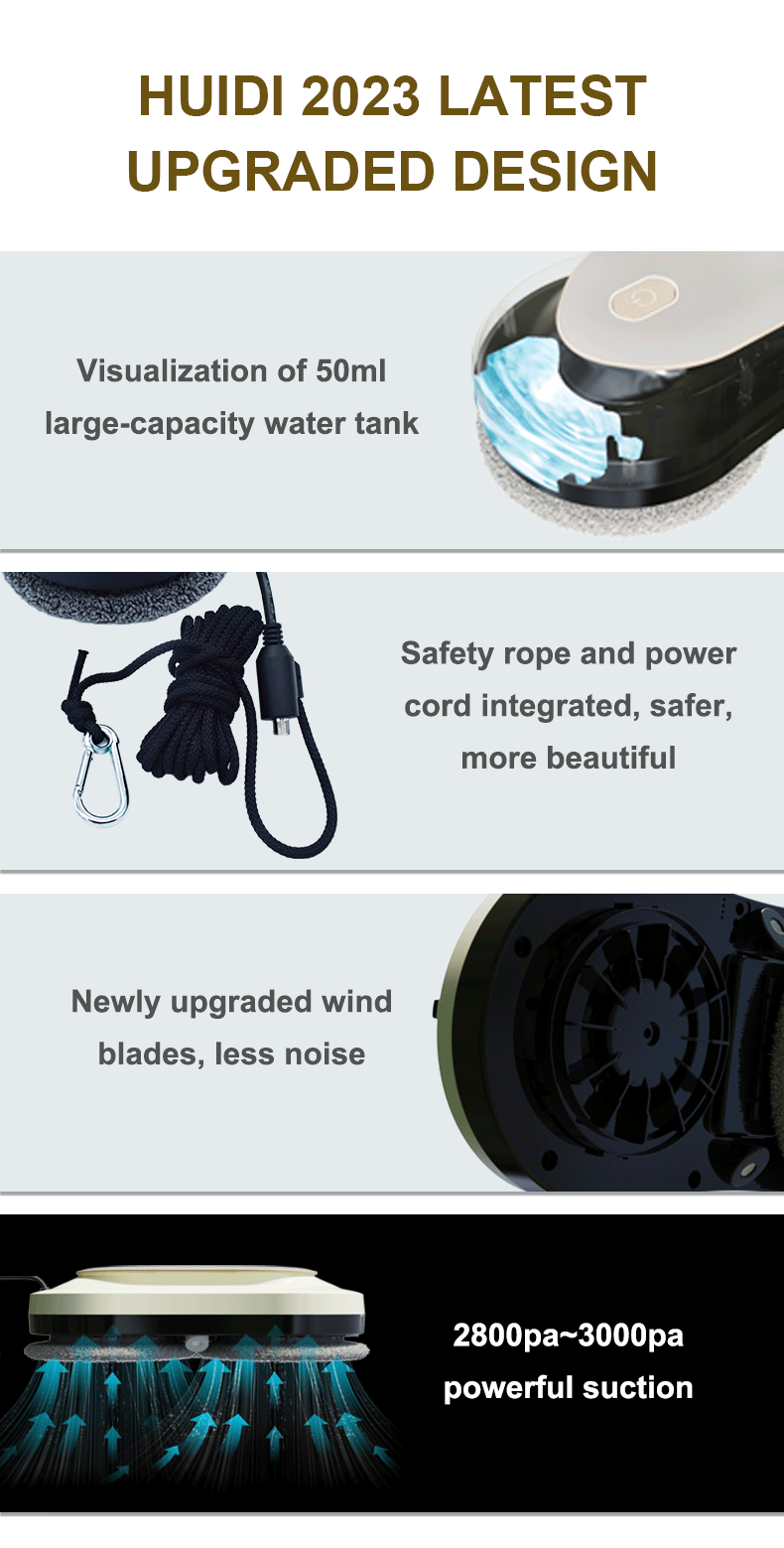
Window cleaning robot RN2-03. When one unit is signed and dated as the approved reference sample, colour, finish, spray pattern and packaging stop being matters of opinion.
The problem: an expectation that was never written down cannot be inspected
The unboxing sequence is predictable. The unit is mounted, run across a pane, and judged. Suction feels weaker than in the demonstration video. The spray wets the glass unevenly. The pad leaves a line near the frame. The app is in a language nobody ordered. The packaging carries the wrong logo. Every one of those observations is real, and none of them can be enforced — because the order never stated what the unit had to achieve, how that achievement would be checked, or who decides when it has been met.
“Underperforming” is not a defect category. It is a comparison between a delivered unit and an expectation that exists only in the buyer’s head. To become actionable, that expectation has to be converted into four things: an attribute, a threshold, a test method, and a decision rule. All four must be agreed before the deposit leaves the buyer’s account, because after delivery the buyer’s only leverage is whatever was written down.
Purchasing terms are the commercial and technical conditions attached to an order: what is supplied, to which specification, how it is inspected, when it is accepted, and what remedy applies if it is not.
Acceptance criteria are the testable thresholds inside those terms — the specific values and observations that decide whether a delivery is accepted, reworked, replaced, credited, or rejected.
Neither document describes a product in general. Both describe one order, placed at one point in time, against one agreed reference.
Why the gap keeps appearing in this category
Three structural features of the window cleaning robot category make unwritten expectations unusually expensive.
1. The market is expanding faster than buying discipline. Research published by Contrive Datum Insights values the global window cleaning robot market at USD 620 million in 2025 and projects USD 1,892 million by 2034. Growth of that shape keeps bringing new buyers into OEM and ODM sourcing, and first-time buyers tend to order against a product page rather than an order specification.
2. A formal standard now exists, and it changes what “compliant” means. China’s industry standard QB/T 8242-2026 for window-cleaning robots takes effect on 1 December 2026, as reported by CHEARI / Hutt Wisdom. A published standard gives both sides a shared reference vocabulary for the first time. An order placed without referencing it leaves the buyer arguing from marketing language instead of a document.
3. “Window cleaning robot” describes a platform, not a single product. One manufacturer platform can cover several models with different housings, water systems and control options. LINICINCO, for example, lists its Window Cleaning Robot platform across models F19-02, RN2-06, RN2-08, LS26, RN2-03, RO3 and HCR10, with customization options covering an external control interface (API/SDK), battery capacity, housing colour and design, logo printing, localized app and packaging. The same category name can therefore cover configurations that behave differently on the same pane of glass.
Add the trade layer and the ambiguity compounds. Window cleaning robots are typically classified under China HS code 8508.1100 — vacuum cleaners with self-contained electric motor under 1500W. Classification can differ by jurisdiction where a product’s suction or receptacle characteristics are interpreted differently, which is exactly why the HS line, and the documents attached to it, belong in the purchasing terms rather than in a forwarder’s inbox.
What purchasing terms and acceptance criteria actually cover
Buyers often assume these documents are legal boilerplate. In practice they are the only part of the transaction that survives contact with a real delivery. A workable set covers six areas.
1. Scope of supply
Name the model, the variant, the accessories, the packaging, the manual language and the app build. A safety tether, a spare microfiber pad and a power adapter are all items that either ship or do not ship; the order should say which. For a private-label build, the logo position, artwork file and packaging specification belong in the scope clause, not in an email chain that nobody can retrieve two months later.
2. Performance envelope
Every performance claim should appear as a value with a tolerance and a reference condition. On the LINICINCO Window Cleaning Robot platform, published reference points include suction power of 3500Pa+ from a high-performance brushless motor, a dual-nozzle ultrasonic atomizing spray for constant moisture control, a cleaning speed of approximately 2.4 min/m², and working noise of ≤65dB. Each of these can be written as an acceptance threshold instead of an adjective.
3. Safety behaviour
For a device that operates on vertical glass, safety is the part of the specification with the shortest tolerance for interpretation. The platform states a 30-minute UPS battery backup, a safety tether and anti-drop sensors, housed in high-strength ABS/PC engineering plastic with a high-tenacity safety rope as an internal component. An acceptance criterion should state the backup duration, confirm that the tether and rope are supplied with every unit, and describe how anti-drop behaviour is demonstrated at inspection.
4. Customization and change control
OEM and ODM orders drift when customization is agreed verbally. The customization list should be explicit and frozen at sample approval: external control interface (API/SDK), battery capacity, housing colour and design, logo printing, localized app (Smart Life or a custom app), and packaging. Each item needs an owner, an approval step, and a defined point after which a change becomes a new order rather than a revision.
5. Inspection and sampling
Acceptance criteria are meaningless without a stated inspection method: who inspects, at which stage, on which sample, with which instrument, and what record is produced. A factory that runs 100% pre-shipment testing gives the buyer a natural gate. The question the order must answer is whether the resulting records are handed over at sign-off or simply held internally.
6. Sign-off, warranty and remedy
The final clause is the one buyers read only after a problem appears. Remedies should escalate in a defined order — rework, replacement of the affected units, credit, or rejection of the lot — and should name who decides and within what period. Warranty length, spare parts availability and technical support obligations belong in the same section. For reference, LINCINCO’s standard warranty term is one year, with extension up to two years by contract.
Table 1: Turning expectations into testable acceptance criteria
| Order checkpoint | Wording that cannot be enforced | Wording you can write into the order | Reference point |
|---|---|---|---|
| Cleaning result | “Cleans the glass properly” | No visible streaks or residue on the agreed reference panel, using the agreed route and pass count | Cleaning speed approx. 2.4 min/m²; smart path planning with Z/N-shaped routes and frame detection |
| Adhesion | “Strong suction” | Suction power of 3500Pa+ confirmed on the approved reference sample | 3500Pa+ high-performance brushless motor |
| Water feed | “Sprays water evenly” | Constant moisture delivery through a dual-nozzle ultrasonic atomizing spray, demonstrated on a defined glass panel | Dual-nozzle atomizing water spray system |
| Noise | “Quiet operation” | Working noise of ≤65dB, measured at the position and distance agreed in the inspection method | Working noise ≤65dB |
| Power interruption | “Won’t fall if power cuts” | 30-minute UPS battery backup after mains disconnection, demonstrated with the unit attached to glass | 30-min UPS battery backup |
| Mechanical backup | “Has a safety rope” | Safety tether and high-tenacity safety rope supplied with every unit, listed in the scope of supply | Safety tether; high-tenacity safety rope as internal component |
| Form factor | “Fits narrow gaps” | Accepted for façade gaps narrower than 60mm; confirm the actual unit profile for the ordered model | Application data: façades with narrow gaps (<60mm) |
| Control | “Works with an app” | Remote control supplied; app on Tuya/Smart Life platform; localized or custom app only where ordered as customization | Remote control and App-ready (Tuya/Smart Life support) |
| Customization | “Put our logo on it” | Itemised list: API/SDK, battery capacity, housing colour/design, logo printing, localized app, packaging — each frozen at sample approval | OEM/ODM customization scope |
| Timing | “Fast delivery” | Sample preparation approx. 5 days; mass production 25–35 days from approval | Quoted lead times |
| Inspection | “Good quality control” | 100% pre-shipment test completed, with inspection records handed over at the pre-shipment gate | 100% pre-shipment test |
| Warranty | “Warranty included” | Standard 1-year warranty; extension up to 2 years stated explicitly if required | Standard 1-year warranty, extendable to 2 years |
Reference values above are drawn from the LINICINCO Window Cleaning Robot platform, which covers models F19-02, RN2-06, RN2-08, LS26, RN2-03, RO3 and HCR10. Confirm the exact figure and test condition for the specific model and configuration in your order before signing.
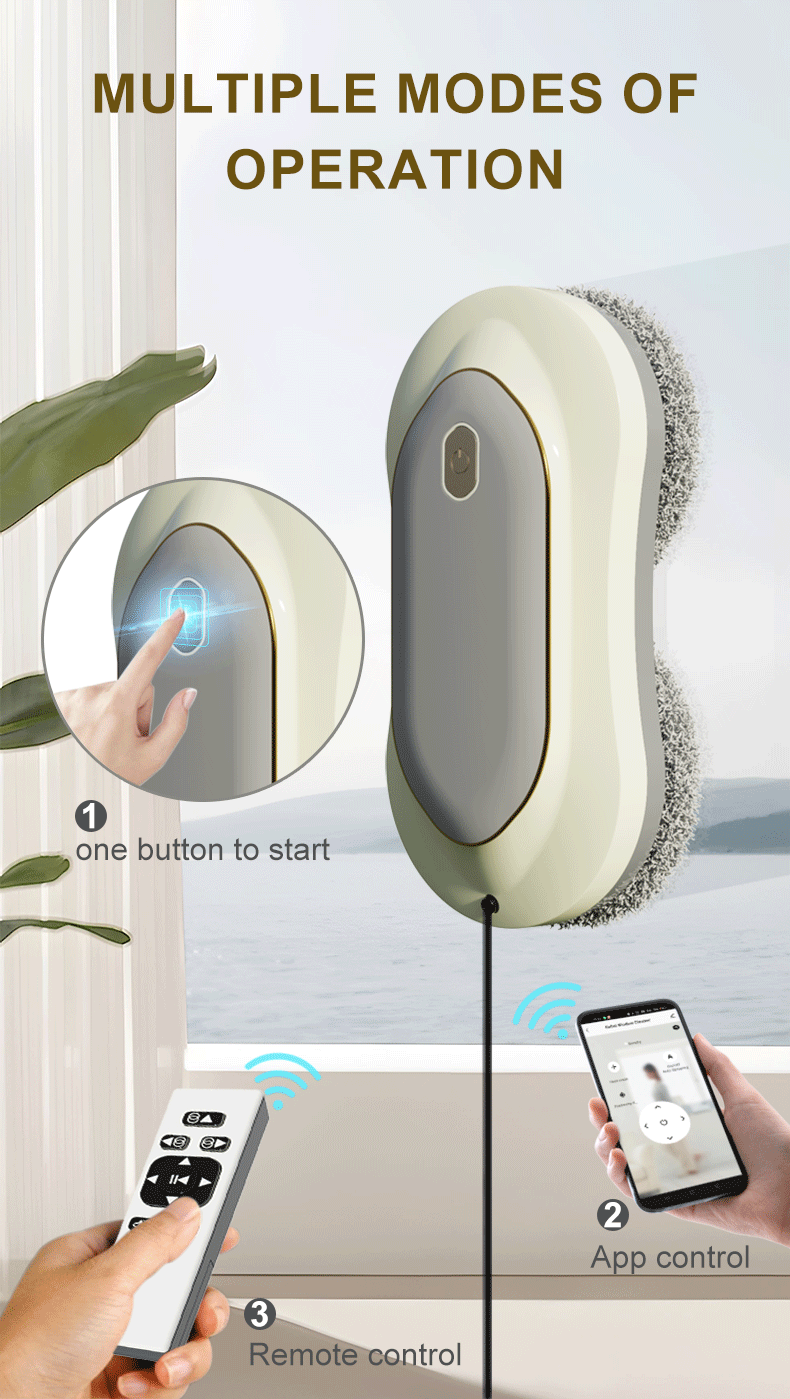
Inspection points should be tied to the delivered configuration, not to the category in general. Photographs taken at the pre-shipment gate are part of the evidence trail.
Step-by-step: writing the order before you pay
Step 1 — Describe the job, not the wish
Start from the installation the unit will actually face: interior glass only or exterior façades, frame depth, glass thickness, ambient temperature range, and who operates the device. LINICINCO’s application data describes indoor and outdoor glass surfaces, high-rise windows and façades with gaps narrower than 60mm, across a working temperature range of 10°C to 40°C. If your project sits at the edge of that envelope, the order must record it before the model is selected — otherwise the shortfall is a selection error, not a quality defect.
Step 2 — Convert each expectation into attribute, threshold and method
Take every observation you would otherwise make at unboxing and rewrite it as a sentence containing a number, a condition and a check. “Suction feels weak” becomes “suction power of 3500Pa+ confirmed on the approved reference sample under the agreed procedure”. “The spray is patchy” becomes “constant moisture delivery through the dual-nozzle atomizing spray, verified on a defined glass panel”. “It is loud” becomes “working noise of ≤65dB at the agreed measuring position”.
Step 3 — Approve a physical reference sample
The fastest way to remove ambiguity is to make one unit the definition. Sample preparation is quoted at approximately 5 days, short enough to build into the schedule before the mass-production commitment. Once signed and dated, that sample becomes the reference against which colour, finish, spray pattern, noise and packaging are judged — and it is the object a dispute is settled against, rather than a memory of a video.
Step 4 — Fix the gates: sample, pre-production, pre-shipment
Three gates are enough for most first orders. Gate one is sample approval, with a signature and a date. Gate two is a pre-production confirmation that the customization list is frozen. Gate three is pre-shipment, where the 100% pre-shipment test result and the inspection record are handed over. Each gate needs a named signer on the buyer side and a defined response window, so that silence does not become implicit approval.
Step 5 — Put the remedy ladder in writing before the deposit
Decide now what happens if part of a lot fails a criterion, and what happens if the whole lot fails. Decide whether the remedy is rework, replacement, credit or rejection, and who carries freight in each case. A remedy clause agreed while both sides are still friendly is worth more than any argument conducted after a container has been opened.
Step 6 — Keep the evidence trail from day one
Store the signed sample record, the approved artwork, the frozen customization list, the inspection records and the pre-shipment test results in one retrievable location. Disputes are decided by documents, and documents are only useful if they can be produced when the delivery actually arrives.
Scenario fit: where the same gap costs the most
Residential distribution. Distributors buying for retail shelves in markets such as Germany, Poland, Switzerland, Denmark, Argentina and the United States are judged by end users who compare the product to a demonstration video. If the delivered configuration differs from the approved sample, the distributor absorbs the complaint. The order should name the model, the app language and the packaging for each market separately, rather than assuming one configuration travels well everywhere.
High-rise and property management. When a device operates above ground level, the acceptance conversation shifts from cleaning quality to safety behaviour. The 30-minute UPS battery backup, the safety tether and the anti-drop sensors become the primary criteria, and the inspection record becomes part of the building operator’s risk file rather than an internal purchasing note.
Professional cleaning companies and hospitality. Hotels, cleaning service providers and airport or municipal pilot projects evaluate throughput rather than features. Cleaning speed of approximately 2.4 min/m² and a noise level of ≤65dB are the figures that decide whether a pilot extends into a purchase, so both belong in the trial agreement — measured the same way at the buyer’s site and at the factory.
OEM and ODM brand launches. A private-label program combines every risk at once: new housing, new logo, new packaging, and possibly a localized app. Here the order specification effectively becomes the product definition. The standard MOQ is 300 units, with selected models supporting small-batch orders, and mass production running 25–35 days after approval — which means a late customization decision does not delay a shipment by days, but by a full production cycle.
Tenders and pilot volumes. Institutional buyers rarely order a single configuration. Documented examples include 504 units per model for a national tender and volume orders of 50 units for regional pilots. Both formats require acceptance criteria written per model, because a criterion that fits one variant may be irrelevant to another — and a tender document that treats the category as one product will be tested against several.
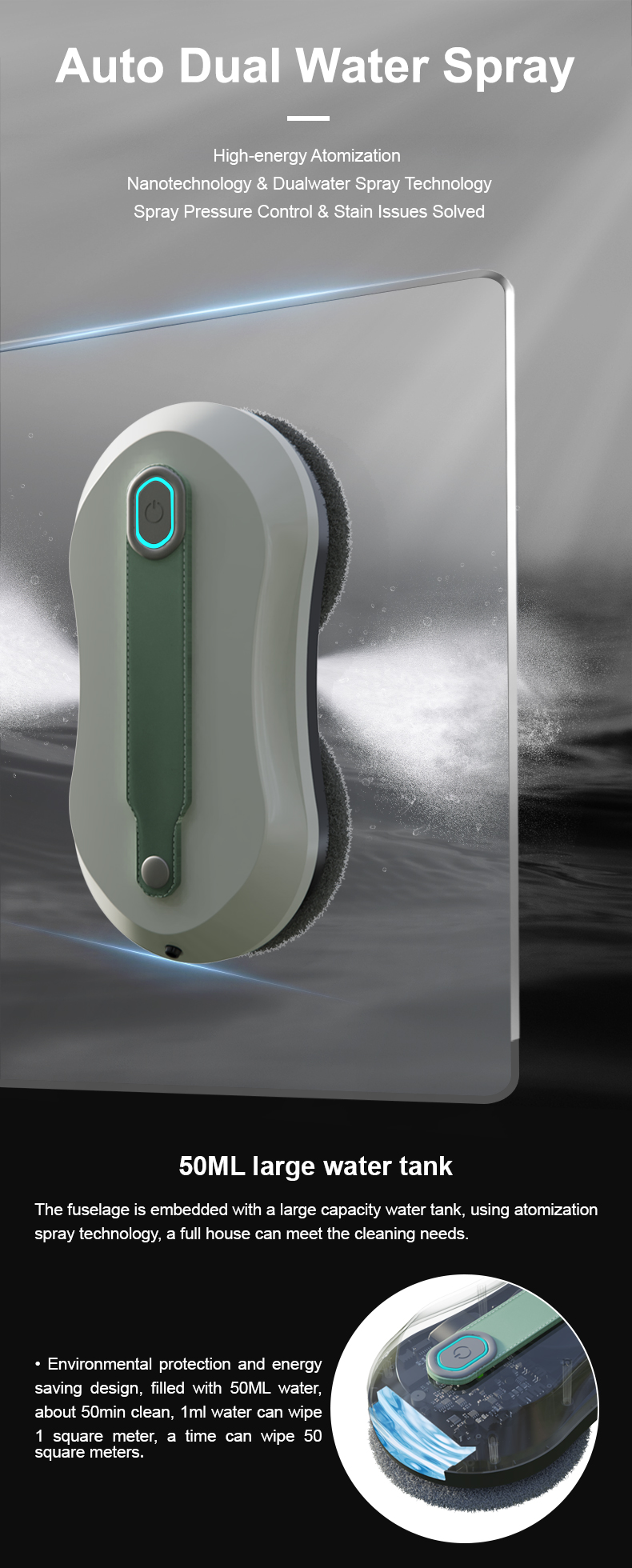
Model-level differences belong in the scope clause. A specification written for one variant does not automatically transfer to another.
Pre-order checklist: scope, inspection, sign-off
The checklist below is deliberately short. It is meant to be completed before the deposit is paid, not reviewed after the first container is unpacked.
Scope
- Model and variant named, with the specific platform configuration stated
- Accessories listed individually: tether, safety rope, cleaning pad, adapter
- App build and interface language stated
- Packaging, logo position and artwork approved in writing
- Customization list frozen: API/SDK, battery capacity, housing colour/design, logo printing, localized app, packaging
- Order volume confirmed against the standard MOQ of 300 units, or a documented small-batch arrangement
- HS code and shipping documents agreed with the forwarder
Inspection
- Every performance claim converted to a value with a tolerance
- Reference conditions written down: glass type, temperature, operator, pass count
- Reference sample approved, signed and dated
- Pre-shipment test records required as a deliverable, not a courtesy
- Suction, speed and noise measured the same way at both ends
- Transit and packaging check defined for the destination market
Sign-off
- Named signer on the buyer side, with a defined response window
- Remedy ladder written: rework, replacement, credit, rejection
- Freight responsibility defined for each remedy
- Warranty term stated: standard 1 year, extension up to 2 years if required
- Spare parts and technical support obligations listed
- All documents archived in one retrievable location
Building acceptance into the factory side
Dongguan Lingxin Intelligent Technology Co., Ltd. (LINCINCO) is a smart cleaning robot manufacturer founded in 2018, producing robot vacuums, wet-dry vacuum cleaners, window cleaning robots, pool cleaning robots, hair dryers and lawn mowers. It operates two production bases: a 50,000 m² facility in Dongguan and a facility of over 25,000 m² in Hengyang, Hunan, which primarily produces window cleaning robots. Combined employment exceeds 600 people, and the R&D team includes 65+ engineers with over 100 product patents.
For buyers drafting acceptance criteria, three operational facts matter more than headline numbers. First, annual production capacity reaches 5 million units across product lines, with monthly capacity for window cleaning robots of over 250,000 units — capacity that makes a 25–35 day mass-production window realistic rather than optimistic. Second, quality control is built on 100% pre-shipment testing and follows global brand standards, including audits associated with Kärcher and Midea. Third, after-sales support covers remote technical support, engineer training and spare parts, under a standard one-year warranty that can be extended to two years by contract.
LINCINCO is a designated OEM/ODM supplier for brands including Kärcher, Hanseem and HUTT, and has delivered high-volume production programs for a top-tier global brand alongside smaller regional pilots. Documented brand programs imply documented quality gates — which is useful for a first-time buyer only if those gates are written into the buyer’s own order rather than assumed. The buyer’s task is to convert an existing factory process into clauses they can hold, and the supplier’s task is to confirm which figures apply to the specific model ordered.
Turn your expectation into a testable order
Before you pay a deposit, ask for the specification in writing, request a sample against your own use case, and confirm which acceptance records will be handed over at pre-shipment.
LINCINCO — Dongguan Lingxin Intelligent Technology Co., Ltd.
Website: www.cleverobot.com
Email: molly@cleverobot.com · WhatsApp: +86 13424841625
Office: No.8 Yuanmei Road, Nancheng District, Dongguan City, Guangdong Province, China
Factory: No. ST121-1-B, Industrial Park, Santang Town, Hengyang City, Hunan Province, China
FAQ
Which standard and trade code should a window cleaning robot order reference?
For the Chinese market, the relevant document is QB/T 8242-2026, the industry standard for window-cleaning robots, which takes effect on 1 December 2026 according to the CHEARI / Hutt Wisdom announcement. If your order is destined for that market, the standard number and its effective date belong in the purchasing terms as a referenced document rather than an assumption. For trade documentation, window cleaning robots are typically classified under China HS code 8508.1100 (vacuum cleaners with self-contained electric motor under 1500W), although classification can differ by jurisdiction when a product’s suction or receptacle characteristics are interpreted differently. Confirm the code with your customs broker and record it in the order.
Which customization points must be listed in the acceptance criteria?
The customization scope should be itemised, not summarised. On LINCINCO’s OEM/ODM programs the configurable elements are the external control interface (API/SDK), battery capacity, housing colour and design, logo printing, localized app (Smart Life or a custom app), and packaging. Each element should be frozen at sample approval, because a housing change or an added app localization after that point alters tooling, software and packaging simultaneously. Acceptance criteria then refer back to the approved sample and the frozen list rather than to a general description of the product.
What order volume makes a custom window cleaning robot program viable?
The standard MOQ for LINCINCO window cleaning robots is 300 units, and selected models support small-batch orders below that level. Documented order patterns range from 504 units per model for a national tender to volume orders of 50 units for regional pilots. Budget planning should follow configuration and volume rather than precede them: this page does not quote unit prices, because no verified price data for specific suction or configuration tiers is available. Request a quotation against your written specification so that the comparison is made between identical scopes.
How long does a sample take, and what should it prove?
Sample preparation is quoted at approximately 5 days. The sample should prove the attributes you intend to enforce: suction power of 3500Pa+, constant moisture through the dual-nozzle ultrasonic atomizing spray, cleaning speed of approximately 2.4 min/m², working noise of ≤65dB, a 30-minute UPS battery backup with safety tether and anti-drop sensors, path planning on Z/N-shaped routes with frame detection, and app or remote control operation. It should also confirm the fit case that matters most — for façades with gaps narrower than 60mm, the unit profile. Sign and date the approved sample; it becomes the reference for the entire order.
What lead time and production capacity should the order assume?
Mass production of LINCINCO window cleaning robots runs 25–35 days, following sample approval and a frozen customization list. Monthly capacity for window cleaning robots exceeds 250,000 units, within an annual capacity of 5 million units across all product lines, and every shipment passes a 100% pre-shipment test. Build the acceptance gates into that timeline rather than after it: sample approval, pre-production confirmation, and pre-shipment record handover. To start that process with your own specification, request a sample and a written quotation at molly@cleverobot.com or via WhatsApp on +86 13424841625.
Conclusion
An underperforming window cleaning robot is usually not the beginning of a quality problem. It is the end of an unwritten assumption. The buyer expected streak-free glass, constant moisture, quiet operation, a localized app and a packaging design; the supplier delivered against a short specification list and a general promise of quality. Between those two positions there was nothing measurable, and therefore nothing claimable.
The repair is procedural, and it happens before payment. Convert each expectation into an attribute with a threshold and a test method. Make one signed sample the definition of the product. Fix three gates — sample, pre-production, pre-shipment — with named signers and defined response windows. Write the remedy ladder while the relationship is still commercial rather than adversarial. Then keep every record in one place.
On a device that hangs on vertical glass, safety and performance criteria deserve the same treatment as price. A 30-minute UPS backup, a safety tether, anti-drop sensors, 3500Pa+ suction and ≤65dB noise are not marketing points; they are the clauses that decide whether a delivery is accepted. Written before delivery, they prevent the dispute. Written afterwards, they only document it.
Have Questions or Need More Details?
Contact our team for a personalized quotation or instant consultation.
Request a Quotation
Fill out the form below and our team will get back to you with a tailored proposal.
WhatsApp Direct Chat
Prefer to chat in real-time? Message us on WhatsApp for instant assistance & quick answers.
- Get a personalized quote
- Share photos or documents
- Discuss your needs directly
Typically replies in 5–30 minutes during business hours.