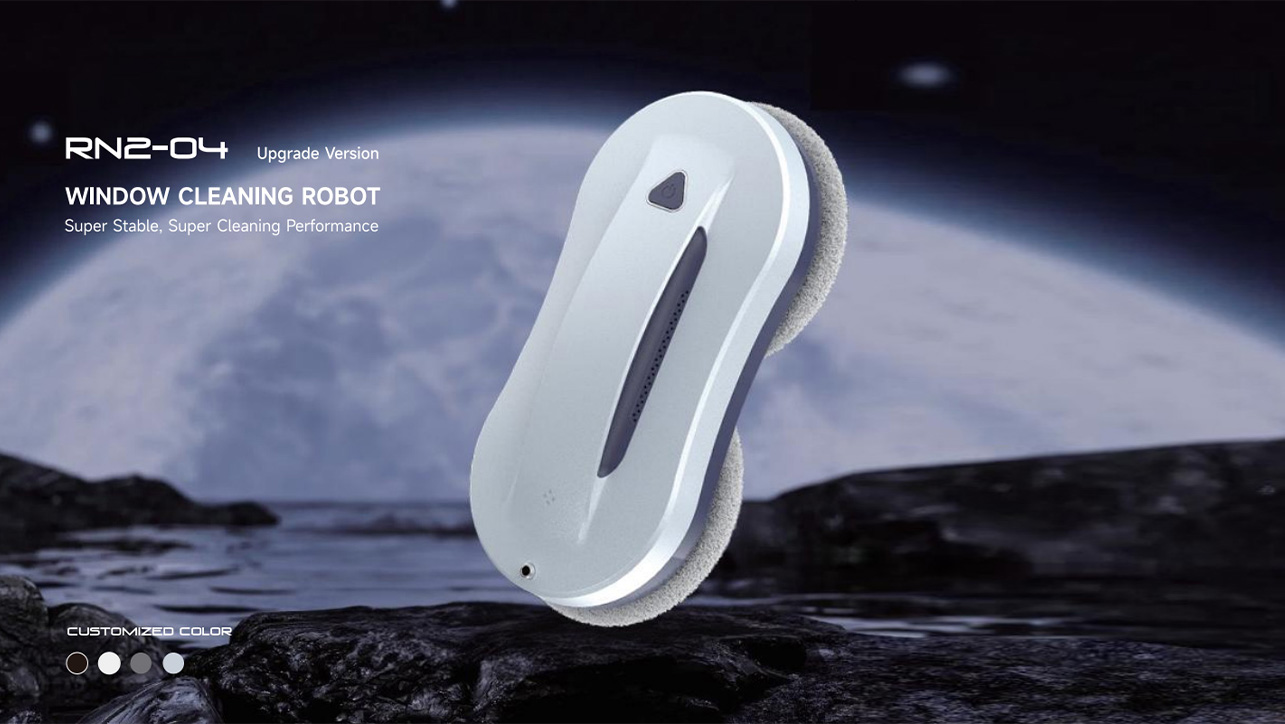
Window Cleaning Robot Showdown: Manual Spray vs. Sensor-Guided Models Compared
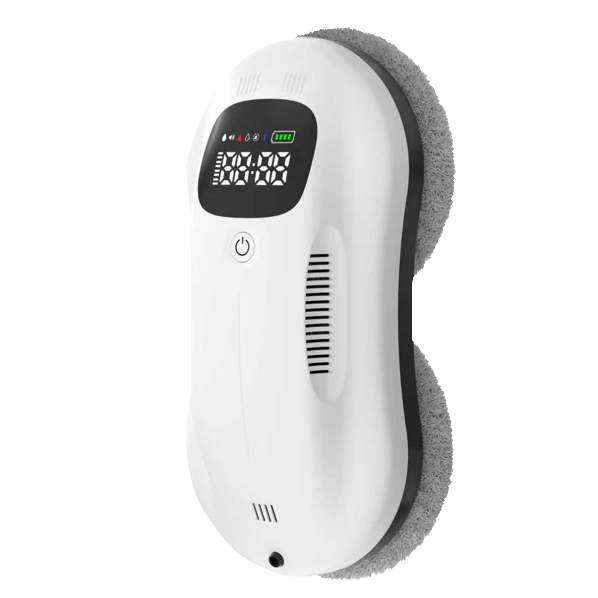
Window cleaning robots are sold as one product category, but they contain two different operating models. Manual-spray models leave the cleaning chemistry to the user, who applies solution to the glass or the pad before and during the run. Sensor-guided models take over the route decision with onboard detection and, on many configurations, apply water or solution through integrated nozzles. That single difference decides who controls the cleaning result, how the machine is protected against a fall, what service structure the buyer has to build, and which technology tier a supplier can genuinely produce at the volume and schedule a forecast requires.
The comparison below stays deliberately at category level. It describes structural traits common to each approach rather than quoting one brand's specification sheet, because a purchasing decision built on a single headline number is fragile. Manufacturer facts appear only where they are verified company information.
Problem Definition: Why These Two Models Are Usually Compared Incorrectly
Most window cleaning robot evaluations start with a headline figure: adhesion strength, suction, running time or unit price. None of those figures explains the operating model, and the operating model is what determines day-to-day cost. A manual-spray unit placed inside a commercial portfolio transfers solution dosing and coverage discipline to the cleaning staff. A sensor-guided unit placed in a single small household may look expensive for the glass area it actually covers. Both mistakes come from comparing the hardware rather than the work.
The second and more expensive failure is on the supply side. Procurement teams confirm the technology tier they want, then discover that the manufacturer's window cleaning robot line is one of several categories sharing the same molding, assembly and testing resources. Capacity that looks large on a specification sheet may already be committed elsewhere in the production calendar. The mismatch rarely appears during the quotation stage; it appears after the order, when the tooling schedule, the injection molding queue and the assembly line cannot be re-sequenced without moving another customer's delivery date.
So the useful question is not which model wins in general. It is which model fits a specific glazing portfolio, and whether the chosen supplier can hold that model's build schedule across repeat orders. Manual-spray designs and sensor-guided designs fail in different ways, and they are protected against falls in different ways, which means they also carry different service obligations.
A third, quieter problem is expectation drift. Buyers often assume every automated window cleaner navigates freely and cleans uniformly because the marketing category is called the same thing. In practice, a device that depends on the operator to pre-treat glass and to reposition it between panes produces a result that tracks the operator's habits, while a device that plans its own route produces a result that tracks its sensing and control logic. Confusing the two leads to complaints that have nothing to do with product quality.
Industry Background: From Tethered Cleaning Pads to Navigation-Led Appliances
Early automated window cleaners behaved closer to remote-controlled cleaning pads than to today's appliances. The operator positioned the device, the operator supplied the cleaning solution, and a safety tether carried the fall-protection duty. Cleaning sequence was essentially a repeated manual pass, and the machine's contribution was adhesion plus pad rotation. This generation is still the basis of the manual-spray tier, and it remains the lowest-cost way to automate flat glass.
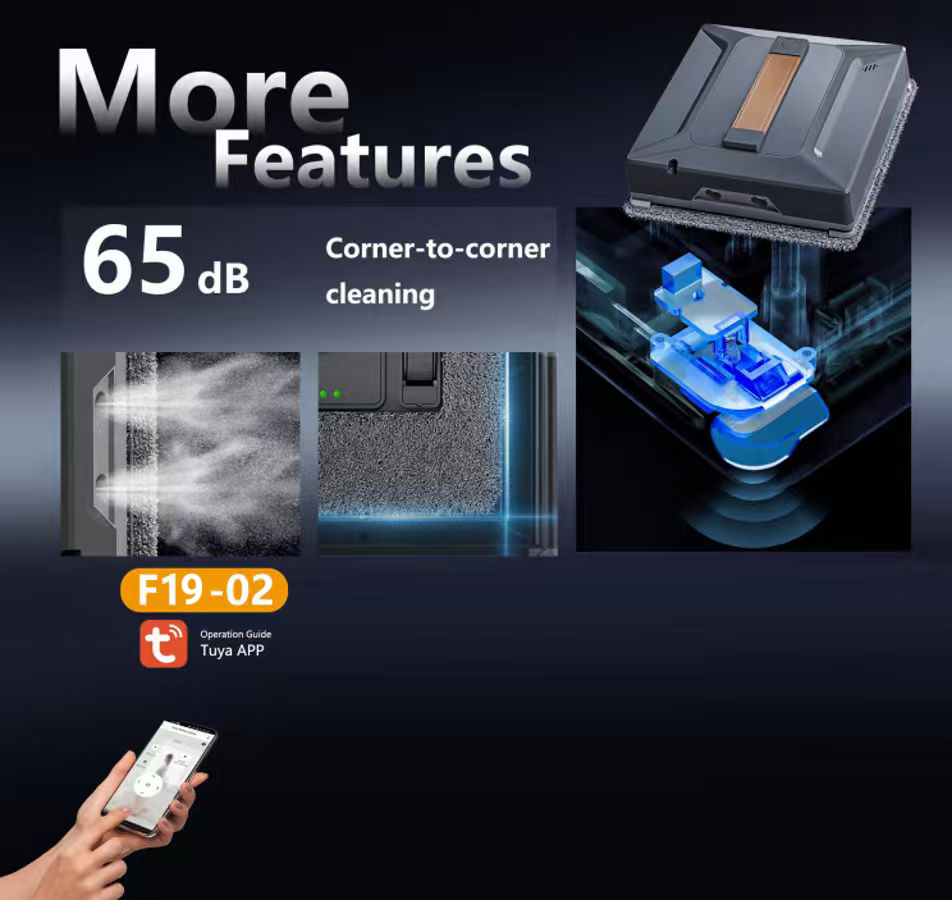
As sensing and control electronics became more affordable, route control migrated into the device itself. Edge detection, orientation sensing and route planning allowed the machine to decide where to move next, which is what freestyle navigation means in practice, and integrated spray systems removed the need for pre-application on many models. Nozzle layouts diversified with it: single-spray, dual-spray and four-nozzle configurations now appear across the category, and the nozzle count became a visible way for buyers to distinguish tiers on a shelf.
The procurement consequence is that a distributor portfolio increasingly needs both tiers rather than one. A catalogue built only on premium sensor-guided units loses price-sensitive residential volume and predictable entry-level replenishment. A catalogue built only on manual-spray units loses the commercial, hospitality and property-management channel, where consistency across many panes and many operators matters more than unit price.
The supply side changed in parallel. Manufacturers that tool housings in-house and run assembly across more than one site are better placed to hold a two-tier range, because appearance changes, nozzle variations and structural parts do not have to wait for external tooling slots. For buyers, that translates into a practical screening question: does the supplier control molding and assembly, or does it assemble a product designed and tooled elsewhere? The answer shapes both customization freedom and schedule reliability.
Detailed Solution: How a Two-Tier Window Cleaning Robot Line Is Actually Produced
Lincinco is the brand of Dongguan Lingxin Intelligent Technology Co., Ltd., a smart cleaning robot manufacturer founded in 2018 that designs, develops, produces and sells smart robot products. Its product lines cover robot vacuums, wet-dry vacuum cleaners, window cleaning robots, pool cleaning robots, hair dryers and lawnmowers. The company is positioned as a smart cleaning robot manufacturer rather than a single-category assembler, which matters when a buyer needs both technology tiers from one supply relationship.
Window cleaning robots sit inside a two-base production structure. Factory 2, located in Hengyang, Hunan, spans over 25,000 square meters and produces window cleaning robots alongside pool cleaning robots, hair dryers and lawnmowers. Factory 1, located in Dongguan, covers 50,000 square meters and focuses on the robot vacuum and wet-dry vacuum cleaner series. Together the two bases employ more than 600 people and are equipped with independent mold rooms, hundreds of injection molding machines and standardized production lines, with an annual production capacity stated at up to 5 million units per year.
Category allocation is the detail that matters most for window cleaning robot procurement. Because window cleaning robots are produced at the Hengyang base rather than sharing the Dongguan vacuum line, the category does not automatically compete with high-volume vacuum demand for the same assembly window. Buyers evaluating capacity should therefore ask which site and which line a given model is assigned to, not only what the company's total output is.
On the engineering side, the company works with a professional R&D team of more than 65 technical experts and reports more than 100 product patents accumulated across its product lines. For market access, CE-RED and ROHS certification documentation is held for the applicable products. Those documents are the two certification types most frequently requested by buyers placing electrical cleaning appliances into European distribution channels.
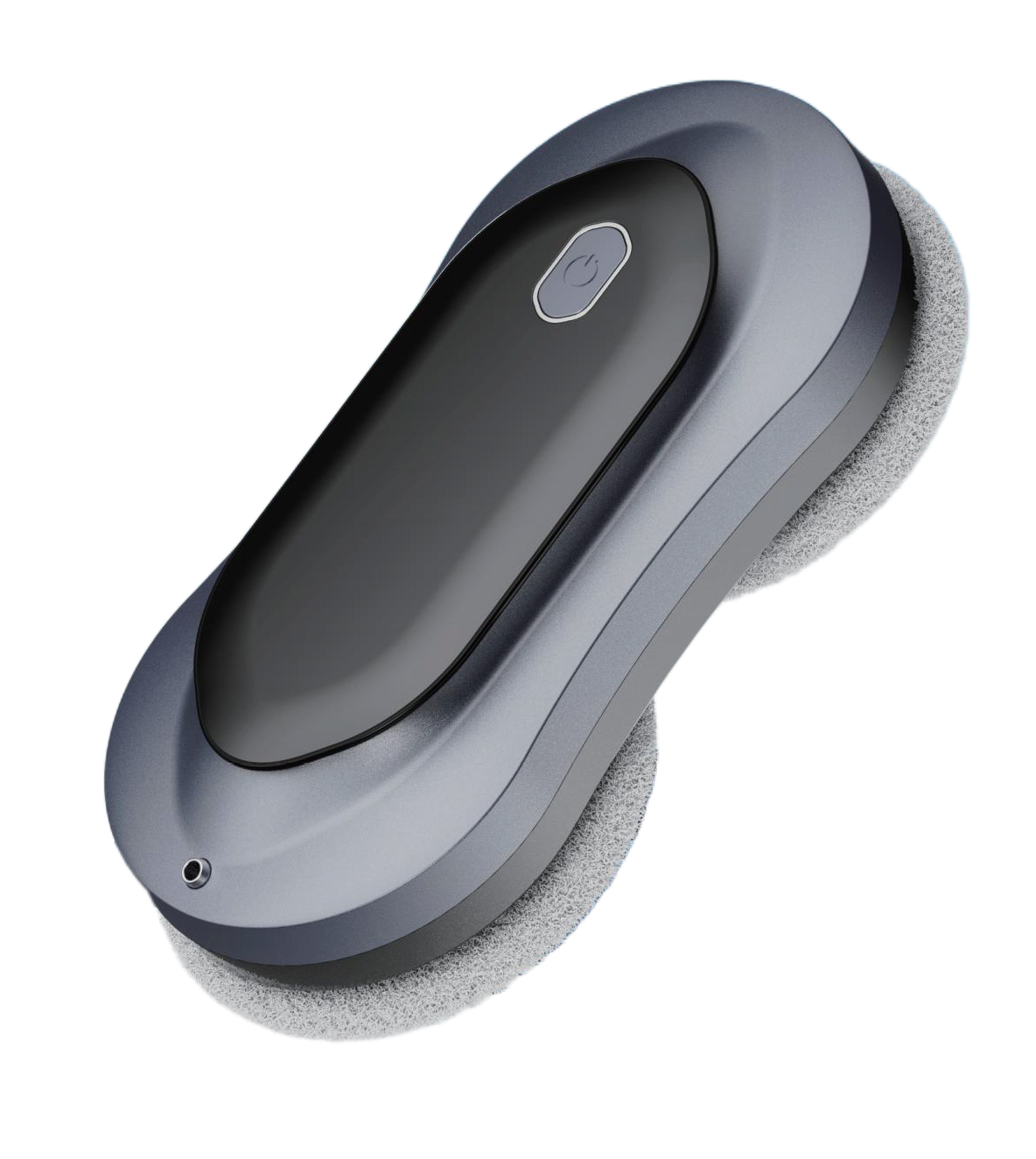
The existing window cleaning robot range already reflects both operating models in physical form. It includes round window cleaning robots, square-shaped four-nozzle models, dual-spray and dual-nozzle robotic window cleaners, and display models configured for OEM and ODM programs. For a buyer, the practical meaning is straightforward: the same manufacturer can supply an entry-level manual-spray SKU for price-led channels and a sensor-guided, spray-integrated SKU for commercial channels, with shared service infrastructure behind both.
Step-by-Step Breakdown: Choosing Between the Two Models and Verifying Supply
Step 1 — Map the glazing before the product
List pane size, height, frame type, accessibility and dirt load for the buildings the robot will actually serve. Freestanding vertical glass, wide single panes and multi-pane facades with narrow frames behave differently. This inventory decides whether route planning inside the device adds real value or whether an operator will be repositioning the unit anyway.
Step 2 — Match the operating model to the operator, not to the brochure
Manual-spray models suit operators who clean the same glass repeatedly and can be trained to dose solution consistently. Sensor-guided models suit portfolios with many panes, rotating staff and an expectation of identical results from different people. In mixed portfolios, a two-tier lineup is usually the honest answer rather than a single compromise model.
Step 3 — Test cleaning outcome on representative glass
Validate on the same glass type the fleet will clean, and check specifically for streaking, residue left after the pass, edge behaviour along frames, and evenness of water or solution application. Operator handling time per pane should be measured at the same time, because handling time is what converts into labour cost in a commercial contract.
Step 4 — Confirm which line the chosen tier is allocated to
Ask which production site and which line produce the specific model, how many categories share that line, and how the tooling queue is scheduled. A credible answer references a specific site, a specific line and a specific tooling room; a vague answer references total company capacity.
Step 5 — Verify compliance documentation against the destination market
Check that certification documents reference the model and configuration being ordered, and that they cover the electrical configuration shipped to that market. Documentation issues are the most common cause of a container being held at the port after a correct production run.
Step 6 — Convert the sample into a controlled ramp
Fix the sequence sample, pilot batch, mass production in the commercial agreement, together with spare parts, warranty handling and the response process for units returned from the field. Lead-time controllability is a property of the whole chain, not of the factory gate alone.
Use Cases: Where Each Model Earns Its Place
Residential high-rise with accessible bay windows. A manual-spray unit is often sufficient where the owner cleans a limited number of panes on a predictable schedule and accepts responsibility for solution dosing. The lower control complexity keeps replacement and repair straightforward.
Hotels and serviced apartments. Sensor-guided models fit better here because different staff members clean the same glass on different shifts, and guests notice streaks rather than admire technology. Repeatability across operators is the purchasing argument, not peak capability.
Retail storefronts and showrooms. Glass is cleaned frequently and often out of hours, so quick per-pane handling matters. Spray-integrated models reduce the preparation step, while manual-spray models remain viable where staff already carry cleaning solution as part of a general cleaning kit.
Property management and facility service companies. A mixed fleet based on a two-tier lineup allows the operator to assign sensor-guided units to large commercial glass and manual-spray units to residential contracts, keeping capital allocation aligned with contract revenue rather than with a single uniform standard.
Distributors and OEM brand owners. Two tiers at two price points protect channel coverage. When the same manufacturer tools the housings and assembles both tiers, appearance differentiation and nozzle configuration changes can be handled inside one customization program instead of two separate supplier relationships.
Comparison Table: Manual Spray vs. Sensor-Guided Window Cleaning Robots
The table below compares the two approaches using general category traits rather than one brand's specification, because the structural differences are what determine fit, service load and purchasing risk.
| Decision Dimension | Manual-Spray Models (User-Applied Solution) | Sensor-Guided Models (Navigation-Led) |
|---|---|---|
| Solution application | Applied by the operator to the glass or the pad before and during the run | Applied through integrated spray or atomisation, in single, dual or four-nozzle configurations depending on the model |
| Path control | Simpler fixed movement patterns; the operator positions the unit and repeats passes | Onboard edge detection, orientation sensing and route planning handle the sequence; freestyle navigation instead of fixed passes |
| Fall-protection logic | A safety tether acts as the primary mechanical safeguard | Layered protection: adhesion plus edge detection first, with the tether retained as a redundant backup |
| Cleaning consistency | Depends on operator dosing discipline and coverage habits | More repeatable across operators, shifts and buildings, since route and application are device-controlled |
| Surface fit | Smaller, accessible glass and simple pane layouts | Large single panes, multi-pane facades and vertical runs where frequent repositioning is impractical |
| Service model | Fewer electronic assemblies; spare parts and repair are simpler to manage | Requires control-electronics and calibration servicing, plus training for service partners |
| Typical buyer | Cost-led entry SKU, light residential use, first-time automation | Commercial portfolios, hospitality, property management and mid-to-premium brand ranges |
| Customisation focus | Housing appearance, pad and mechanical parts | Housing appearance plus nozzle layout, display configuration and control parameters |
Verified Manufacturer Capability Reference
The following figures are verified company information and are listed separately so that they are not confused with the category-level comparison above.
| Capability Item | Verified Detail |
|---|---|
| Company | Dongguan Lingxin Intelligent Technology Co., Ltd. (Lincinco), founded 2018 |
| Production bases | Two sites: Dongguan and Hengyang, Hunan |
| Factory 1 | Dongguan, 50,000 square meters, focused on robot vacuum and wet-dry vacuum cleaner series |
| Factory 2 | Hengyang, Hunan, over 25,000 square meters, produces window cleaning robots, pool cleaning robots, hair dryers and lawnmowers |
| Workforce | More than 600 employees across the two factories |
| Tooling and molding | Independent mold rooms and hundreds of injection molding machines |
| Production lines | Standardized production lines |
| Annual capacity | Stated at up to 5 million units per year |
| R&D | Professional R&D team of more than 65 technical experts |
| Patents | More than 100 product patents |
| Certification documentation | CE-RED and ROHS |
| Window cleaning robot range | Round models, square-shaped four-nozzle models, dual-spray and dual-nozzle robotic window cleaners, display models for OEM programs |

FAQ: Manual Spray vs. Sensor-Guided Window Cleaning Robots
1. What compliance documentation should a window cleaning robot manufacturer hold for European distribution?
Compliance should be verified against the exact model and configuration being ordered, not against the supplier's general capability statement. Lincinco holds CE-RED and ROHS certification documentation for the applicable products, which are the certification types most frequently requested by buyers placing electrical cleaning appliances into European channels. Buyers should confirm that the certificate references match the ordered model and that the documentation covers the electrical configuration shipped to the destination market.
2. How can a buyer verify that a manufacturer's window cleaning robot capacity actually matches demand?
Verify line allocation rather than total output. Lincinco operates two production bases: Factory 1 in Dongguan covers 50,000 square meters and focuses on robot vacuum and wet-dry vacuum cleaner series, while Factory 2 in Hengyang, Hunan spans over 25,000 square meters and produces window cleaning robots, pool cleaning robots, hair dryers and lawnmowers. The two plants employ more than 600 people and run independent mold rooms, hundreds of injection molding machines and standardized production lines, with a stated annual capacity of up to 5 million units per year. The relevant question for a window cleaning robot order is which site and which line the specific model is assigned to, and which other categories share that line.
3. What drives the cost difference between manual-spray and sensor-guided window cleaning robots?
The difference is structural rather than commercial. Manual-spray models concentrate cost in mechanics: housing, adhesion system, pad assembly and drive parts. Sensor-guided models add control electronics, edge detection and route-planning components, plus a more complex application system whose cost scales with nozzle layout, from single-spray through dual-spray to four-nozzle configurations. Housing tooling and surface finish, testing and quality-control scope, packaging and documentation, and order structure all move the total as well. For a custom program, buyers should compare tooling and validation cost together with unit cost, because a cheaper unit price with new tooling can be the more expensive route.
4. How should a buyer validate a new window cleaning robot model before mass production?
Validate on representative glass rather than in a showroom, and check four things: streaking after the pass, residue left by water or solution, edge behaviour along frames and corners, and handling time per pane. Confirm the exact configuration at the same time, including nozzle count, housing appearance and display version, since these are the points most often changed between sample and mass production. Lincinco's independent mold rooms support appearance and structural customisation during the sample stage, and the sample should then move into a defined pilot batch before full-volume production.
5. How do buyers judge whether delivery lead time is controllable?
Look for structural indicators instead of promises. In-house mold rooms mean tooling does not wait for an external supplier's schedule. Injection molding machines and standardized production lines under the same roof mean molding and assembly queues can be re-sequenced together. A workforce of more than 600 across two sites, and an annual capacity stated at up to 5 million units per year, provide the buffer that single-site suppliers cannot offer. Category allocation matters too: window cleaning robots are produced at the Hengyang base, so the category is not automatically displaced by vacuum cleaner demand at Dongguan. Ask for the production calendar reference and the sample-to-mass ramp plan in writing.
Conclusion: Match the Model to the Glass, Then Match the Supplier to the Schedule
Manual-spray and sensor-guided window cleaning robots are not competing versions of the same product. They are two answers to different operating conditions. Manual-spray designs put solution control and positioning in the operator's hands, keep the control architecture simple, and rely on a safety tether as the primary fall protection. Sensor-guided designs move route decisions into the device, layer adhesion and edge detection ahead of the tether, and, in most integrated configurations, apply solution through onboard nozzles. The first is usually the lower-complexity entry tier; the second is usually the tier that holds commercial and hospitality portfolios together.
For buyers, the decision does not end at the technology choice. The tier only becomes a product when a manufacturer can tool it, produce it on an allocated line and repeat the schedule across orders. That is why capacity verification should be specific: which site, which line, which tooling room, and which other categories share the same calendar.
Next Step: Validate Both Tiers Before You Commit
Lincinco supplies manual-spray and sensor-guided window cleaning robots, including round, square-shaped four-nozzle, dual-spray and dual-nozzle configurations, with CE-RED and ROHS documentation and in-house tooling, molding and assembly across two production bases.
Request a sample, a quotation or the current catalogue: visit www.cleverobot.com, email molly@cleverobot.com, or message +86 13424841625 on WhatsApp.