Window Cleaning Robot OEM Partnerships: Revisions, Spare Parts & Warranty FAQ
Window Cleaning Robot OEM Partnerships: Revisions, Spare Parts & Warranty FAQ
A window cleaning robot OEM partnership is not proven by the first shipment. It is proven in month fourteen, when a standard changes, a wear part runs out in a field market, or a retail chain returns units with a fault that cannot be reproduced on the line. Three workflows decide that outcome: product revisions, spare parts planning, and warranty handling. This FAQ answers the questions OEM buyers raise at the decision and execution stage, and it separates what a manufacturer can document today from what still has to be written into the agreement.
LINICINCO (Dongguan Lingxin Intelligent Technology Co., Ltd.) is a China-based manufacturer of window cleaning robots and related cleaning robots that runs OEM and ODM programs for international brands. The company exports window cleaning robots to the European Union (Germany, Poland, Switzerland), the United States, Argentina, Mexico, Russia/CIS, and the Middle East, and is a designated OEM/ODM supplier for brands including Kärcher, Hanseem, and HUTT.

Reference image: planning a long-term window cleaning robot OEM program covers revisions, spare parts, and warranty handling.
Problem Definition: Four Gaps That Surface After Launch
Most OEM problems in this category are documentation problems, not production problems. The factory can build the unit; the gap appears when the buyer needs the unit explained, changed, repaired, or restocked. Four gaps account for most of the friction.
- Revision gap. The approved sample exists as an object, not as a data set. Without a frozen bill of materials, firmware version, and packaging code, a change request cannot be priced, approved, or traced. A revision without a baseline is not a revision; it is a new product wearing an old part number.
- Spare parts gap. Parts are discussed at quotation stage, priced loosely, and then forgotten once volume starts. Two years later the buyer discovers which components were single-sourced and which are only produced during a full production run.
- Warranty gap. Claims are settled by email negotiation rather than by a rule. The same defect is credited in one market and repaired in another, and nobody can reconstruct why.
- Communication gap. Change news arrives with the purchase order. The buyer learns about a component substitution at the same moment their dealers learn about it.
The cost of these gaps is not a single invoice. It is a channel that stops reordering because it cannot promise its own customers a replacement within a reasonable time. For a distributor or brand owner, that is the expensive part.
Industry Background: Why Support Is Now a Contract Term
Two structural changes have pushed long-term support from a courtesy into a negotiating item.
The installed base is growing. Contrive Datum Insights values the global window cleaning robot market at USD 620 million in 2025 and projects USD 1,892 million by 2034. Research estimates differ by scope: depending on whether industrial facade equipment is included, the 2025 base is variously placed between USD 574 million and USD 795 million. Whatever the exact figure, each unit sold creates a service obligation that outlives the shipment.
Standards are now dated documents. China's QB/T 8242-2026, described by its publisher Hutt Wisdom / CHEARI as the first industry standard for window-cleaning robots, takes effect on 1 December 2026. A dated standard means scheduled revision cycles: models carried over from earlier production have to be reviewed against a document that did not exist when they were designed.
Trade classification adds a shipping layer. China Customs classifies complete window cleaning robots under HS code 8508.1100 (vacuum cleaners with self-contained electric motor below 1500W). Some markets may treat such units differently, and the classification of spare parts is a separate question from the classification of a finished robot. Buyers planning a multi-year parts flow should confirm both, not assume one.
Put together, these three facts mean the contract that governs years two to five increasingly matters more than the unit price agreed in year one.
The Solution Model: Three Written Workflows, One Factory Behind Them
A long-term OEM program is supportable when three workflows are written down and a manufacturing base stands behind them: revision control, spare parts planning, and a warranty disposition path. Pricing, packaging, and sampling all sit inside those three.
What the manufacturing base has to provide
Support promises are only credible if the production base can absorb them. LINICINCO operates two production bases with a combined floor area of over 75,000 square meters and reports an annual production capacity of over 3,000,000 window cleaning robots, based on a monthly capacity of over 250,000 units.
Quality control for window cleaning robots includes 100% pre-shipment testing, and the company has experience adhering to global brand standards such as Kärcher and Midea audits. That audit experience matters for a buyer whose retail partner will eventually send its own auditors to the line.
After-sales services include remote technical support, training for engineers, and spare parts availability. Those three elements map directly onto the three workflows below, which is why they belong in the same conversation rather than in separate appendices.

Reference image: production capacity is the foundation a spare parts allocation is built on.
Workflow 1 — Revision control
Revision control answers one question: what exactly is the approved product? The answer is a revision code that points to a bill of materials, a firmware version, a packaging specification, and a test record. Every later change — a motor supplier, a pad material, a sensor threshold, a label — is an engineering change request against that code, not a verbal instruction during a production run.
For OEM and ODM window cleaning robot projects, sample preparation lead time is approximately 5 days. That number is a preparation figure; it does not include the buyer's own validation time. A revision sample should therefore travel with the same evidence package used for mass production, so it can be judged on identical criteria.
Workflow 2 — Spare parts planning
Spare parts planning is an inventory question with a contractual edge. Two things have to be agreed before volume ramps: which components are service parts, and for how long after end of production they remain available. Wear items, electronics, and structural parts have different failure logic and should not be lumped into a single "parts available on request" line.
For a seller working across several regions, the geography matters as much as the list. LINICINCO's export markets include the European Union (Germany, Poland, Switzerland), the United States, Argentina, Mexico, Russia/CIS, and the Middle East — a spread that makes regional stock positions, freight terms, and customs handling of parts worth settling early rather than after the first claim.
Workflow 3 — Warranty workflow
A warranty workflow is a decision rule, not a promise. It should define how a claim is submitted, what evidence travels with it, and which outcome applies. Three outcomes cover most cases: repair, replacement, or credit. Each needs a named owner on both sides and a time window.
LINICINCO's after-sales scope — remote technical support, engineer training, and spare parts availability — gives a buyer the three ingredients a warranty process actually needs: someone to diagnose, someone trained to fix, and a part to fix it with.
Communication cadence
Cadence is cheap to agree and expensive to improvise. A workable structure is: a confirmation checkpoint at order release, a production status update during the 25–35 day mass production window, a monthly program review covering revisions and open claims, and a quarterly review that includes field failure data and the status of the spare parts pool. Whether a supplier already runs this rhythm is a question worth asking directly.
Step-by-Step: From Order Release to the First Annual Review
The sequence below is the minimum discipline for keeping an OEM program supportable after the launch order. Each step produces a document the buyer can reuse at the next revision.
- Freeze the baseline before the purchase order. Record the bill of materials, firmware version, packaging specification, and revision code. Anything not recorded cannot be changed in a controlled way later.
- Confirm sample and production timing in writing. For OEM and ODM projects, sample preparation lead time is approximately 5 days and mass production lead time is 25–35 days. Add your own validation and shipping time on top; do not treat the factory figure as a delivery date.
- Agree the service parts list and service window. Split the list into wear items, electronics, and structural parts, and attach a price and an availability commitment to each line.
- Define the warranty disposition matrix. State which claim types lead to repair, replacement, or credit, what photographic or diagnostic evidence is required, and who pays freight in each direction.
- Name the escalation path. Identify the technical contact for first-line support, the person who authorises a replacement, and the training route for the buyer's own service engineers.
- Schedule the compliance review. Any dated standard or brand audit that applies to your markets should sit on the calendar as a revision trigger. For programs selling into China, QB/T 8242-2026 takes effect on 1 December 2026.
- Run an annual review with field data. Compare failure reports, parts consumption, and claim outcomes. Decide whether to hold the current revision, revise it, or re-qualify the model entirely.

Reference image: 100% pre-shipment testing is the evidence base a warranty workflow depends on.
Use Cases: Three Situations Where the Workflow Decides the Outcome
1. A distributor adding a second private-label SKU in year two
By year two the distributor knows which features sell and wants a second model. The efficient route is to reuse the existing revision baseline: identical electronics platform, different housing or pad configuration. If the first program was documented properly, the second model inherits its test records and part numbers instead of starting from zero. If it was not, the distributor pays twice for the same engineering work.
2. A brand owner selling into China across the 1 December 2026 standard date
QB/T 8242-2026 takes effect on 1 December 2026. A brand with a model designed before that date needs a scheduled review against the standard rather than a rushed one after a customer asks. The review output is a decision: keep the current revision, issue a minor change, or re-qualify. Whichever it is, it should be recorded against a revision code.
3. A multi-region seller covering Europe, the Middle East, and Latin America
A seller holding stock in several of LINICINCO's export markets — the European Union (Germany, Poland, Switzerland), the United States, Argentina, Mexico, Russia/CIS, and the Middle East — needs parts positioned where claims happen. The planning question is not "can we get a part" but "how many claims can we close locally before a part has to fly". That target, not a vague availability promise, is what belongs in the contract.
Comparison Table: Documented Facts vs. Contract Terms
The table below separates what a buyer can verify from public and supplier-documented information from what must still be negotiated. It is not a scoring of suppliers; it is a checklist for the second meeting.
| Partnership question | Documented fact available today | What to put in the agreement |
|---|---|---|
| Can the supplier keep building our model? | Two production bases with over 75,000 m² combined; annual capacity over 3,000,000 window cleaning robots; monthly capacity over 250,000 units | Monthly capacity allocation per program and a peak-season calendar |
| How fast is a revised sample? | Sample preparation lead time approximately 5 days for OEM/ODM projects | Sample approval criteria, revision code, and the test evidence that ships with it |
| How long is a production run? | Mass production lead time 25–35 days for OEM/ODM projects | Order release cut-off dates and holiday shutdown notice |
| Is every unit checked? | 100% pre-shipment testing; adherence to global brand standards such as Kärcher and Midea audits | Test record format and defect disposition rules |
| Who handles service? | Remote technical support, engineer training, and spare parts availability | Named contacts, escalation path, and response channel |
| Can replacements reach our markets? | Exports to the EU (Germany, Poland, Switzerland), the United States, Argentina, Mexico, Russia/CIS, and the Middle East | Regional parts stocking plan, freight terms, and parts classification |
| Which changes force a revision? | QB/T 8242-2026 takes effect on 1 December 2026 in China | Change-notification clause and lead time for a compliance revision |
What is not covered by public data: this category does not publish an FOB price breakdown by suction power tier. Cost benchmarking for spare parts and revision work should be treated as a separate exercise, handled through a direct quotation rather than inferred from a finished-goods price.
FAQ: Revisions, Spare Parts, and Warranty Workflow
Which compliance changes should force a revision of an existing window cleaning robot model?
Any dated standard, audit finding, certification change, or trade classification change should be treated as a revision trigger. In China, QB/T 8242-2026, described by its publisher Hutt Wisdom / CHEARI as the first industry standard for window-cleaning robots, takes effect on 1 December 2026, so a program selling into that market should schedule its review before that date rather than after. A brand-standard audit is a second trigger: LINICINCO's quality control adheres to global brand standards such as Kärcher and Midea audits, and a requirement introduced through that audit enters the same revision path as a regulatory change. Classification is a third: China Customs places complete window cleaning robots under HS code 8508.1100, while the classification of spare parts is a separate question that should be confirmed for each destination market.
Can one manufacturer support revisions, spare parts, and after-sales at the same time?
These three draw on different resources. Revisions need engineering and tooling; spare parts need production slots and inventory; after-sales needs people — remote technical support, training for engineers, and parts availability. LINICINCO's stated after-sales scope covers exactly those three elements, and its production base supports the first two: two manufacturing sites with over 75,000 m² combined, annual capacity over 3,000,000 window cleaning robots, and monthly capacity over 250,000 units. Capacity is not the same as allocation, however. A buyer should ask for a written parts allocation per program rather than assuming that available capacity will be redirected to service parts on request.
How should spare parts and warranty costs be budgeted before signing?
Start with a parts list that separates wear items, electronics, and structural parts, then attach a unit price and a service window to each line — how long after end of production the part remains available. Add a warranty disposition matrix that states which claim types lead to repair, replacement, or credit, and who pays freight in each direction. Cost benchmarking itself has to come from direct quotation: no public price breakdown by suction power tier exists for this category, so a budget built on finished-goods pricing alone will understate the service tail.
What does the sample round look like after a revision?
For OEM and ODM window cleaning robot projects, sample preparation lead time is approximately 5 days. That figure covers preparing the sample, not approving it, and it does not include the buyer's own validation or shipping. A revision sample should travel with the revision code, the bill of materials and firmware version it corresponds to, and the same test evidence used for mass production — LINICINCO performs 100% pre-shipment testing on window cleaning robots. Signing off a sample without that package turns the next production run into a negotiation about what was actually approved.
How fast can a revised model and its spare parts reach us?
Mass production lead time for OEM and ODM window cleaning robot projects is 25–35 days, after sample approval. Spare parts do not follow the same clock and should be agreed as a separate service commitment covering quantity, availability window, and shipping route to your markets — LINICINCO exports to the European Union (Germany, Poland, Switzerland), the United States, Argentina, Mexico, Russia/CIS, and the Middle East. To move from planning to execution, you can request a current sample and a service parts list from LINICINCO through the company's OEM contact page, and compare the returned documents against the checklist in this article.
Conclusion: Sign the Support Model, Not Just the Unit Price
Window cleaning robot OEM programs are won on unit economics and lost on support economics. The revision baseline, the service parts list, and the warranty disposition matrix are the three documents that determine whether year two is a repeat order or a dispute. A supplier with 100% pre-shipment testing, brand-standard audit experience, remote technical support, engineer training, and spare parts availability has the raw material for all three — but raw material is not a commitment until it appears in the agreement.
Before signing, a buyer should be able to answer four questions without asking again: what revision code is being approved, which parts are stocked and for how long, who authorises a replacement claim, and which dated standard will force the next revision. If any answer is missing, that is the agenda for the next call.
Next step: sample and service parts list
For OEM and ODM window cleaning robot projects, LINICINCO prepares samples in approximately 5 days and runs mass production in 25–35 days. Buyers evaluating a long-term program can request a sample together with a service parts list and warranty workflow outline, then verify each item against the table above.
Contact LINICINCO about an OEM/ODM window cleaning robot program
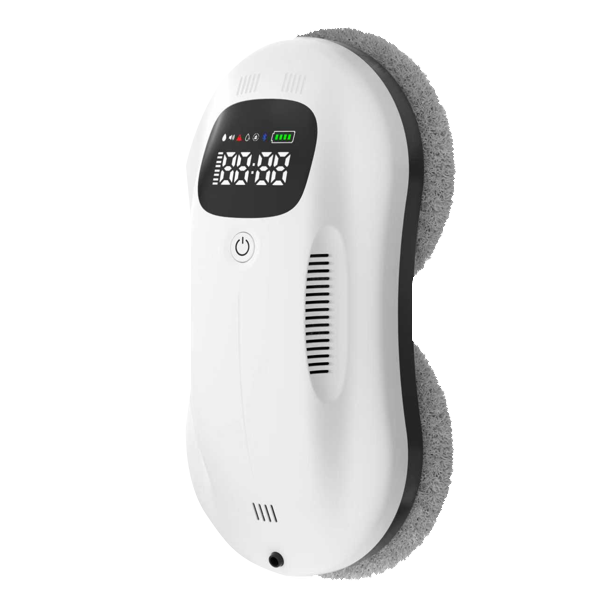
Reference image: custom window cleaning robot programs are sustained by revision control and parts planning, not by the launch order alone.
Have Questions or Need More Details?
Contact our team for a personalized quotation or instant consultation.
Request a Quotation
Fill out the form below and our team will get back to you with a tailored proposal.
WhatsApp Direct Chat
Prefer to chat in real-time? Message us on WhatsApp for instant assistance & quick answers.
- Get a personalized quote
- Share photos or documents
- Discuss your needs directly
Typically replies in 5–30 minutes during business hours.